



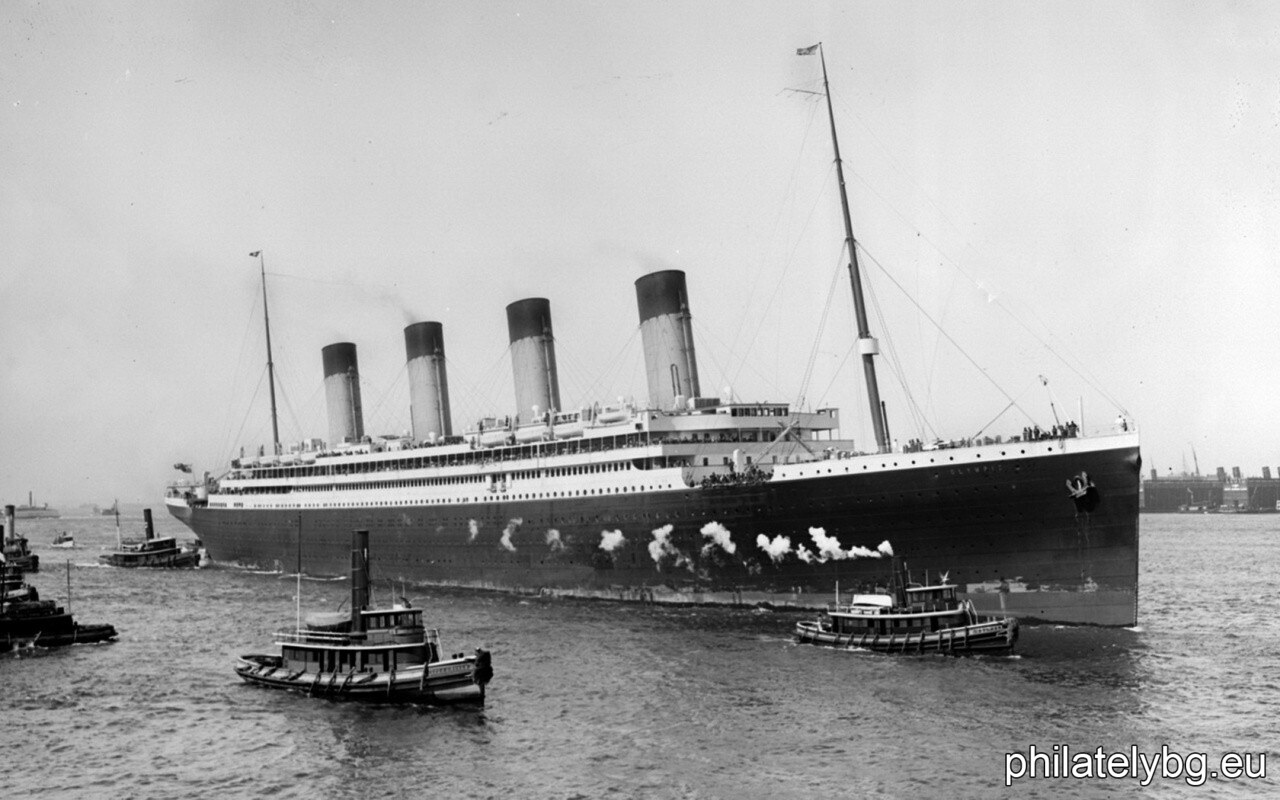
The ship has a post office department with five clerks and thousands of mail sacks. This is the story of the people who kept working while the ship was sinking, of the letters, and of the question of what remains of the mail.
When the Titanic set out from Southampton for New York in April 1912, her name was preceded by the abbreviation RMS – Royal Mail Steamer. This was not decoration. It meant that the ship had a contract to carry mail, and the White Star Line had concluded such contracts with the British government. On most transatlantic liners the mail traveled in sealed sacks from one port to another. The Titanic had a genuine, working post office on her lowest decks, where five clerks sorted the letters en route so that they would be ready for delivery on arrival in port.
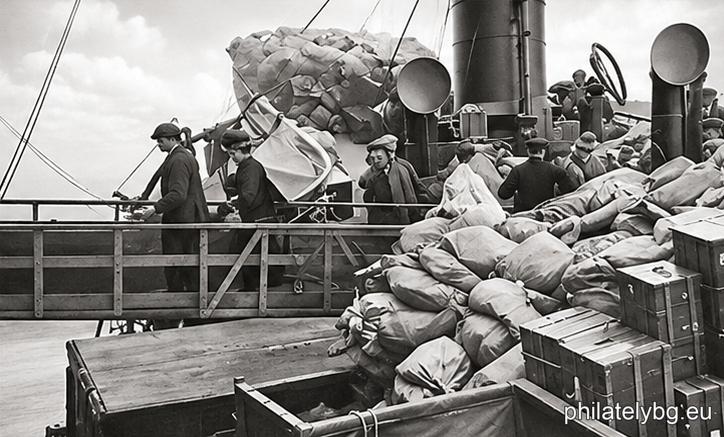
The quantities are impressive, although the exact figures differ. The most commonly cited figure is 3,364 sacks, loaded in three stages: 1,758 at Southampton, 1,412 at Cherbourg in France and 194 at Queenstown in Ireland. A standard sack held about 2,000 letters and parcels, and the total loss is estimated at six to ten million items, with more than seven million most often given, about 1.6 million of them registered letters and parcels. The day after the disaster, the New York postmaster Edward Morgan spoke of 3,500 sacks, and later of 3,423. The figures in this publication should therefore be read as approximate.
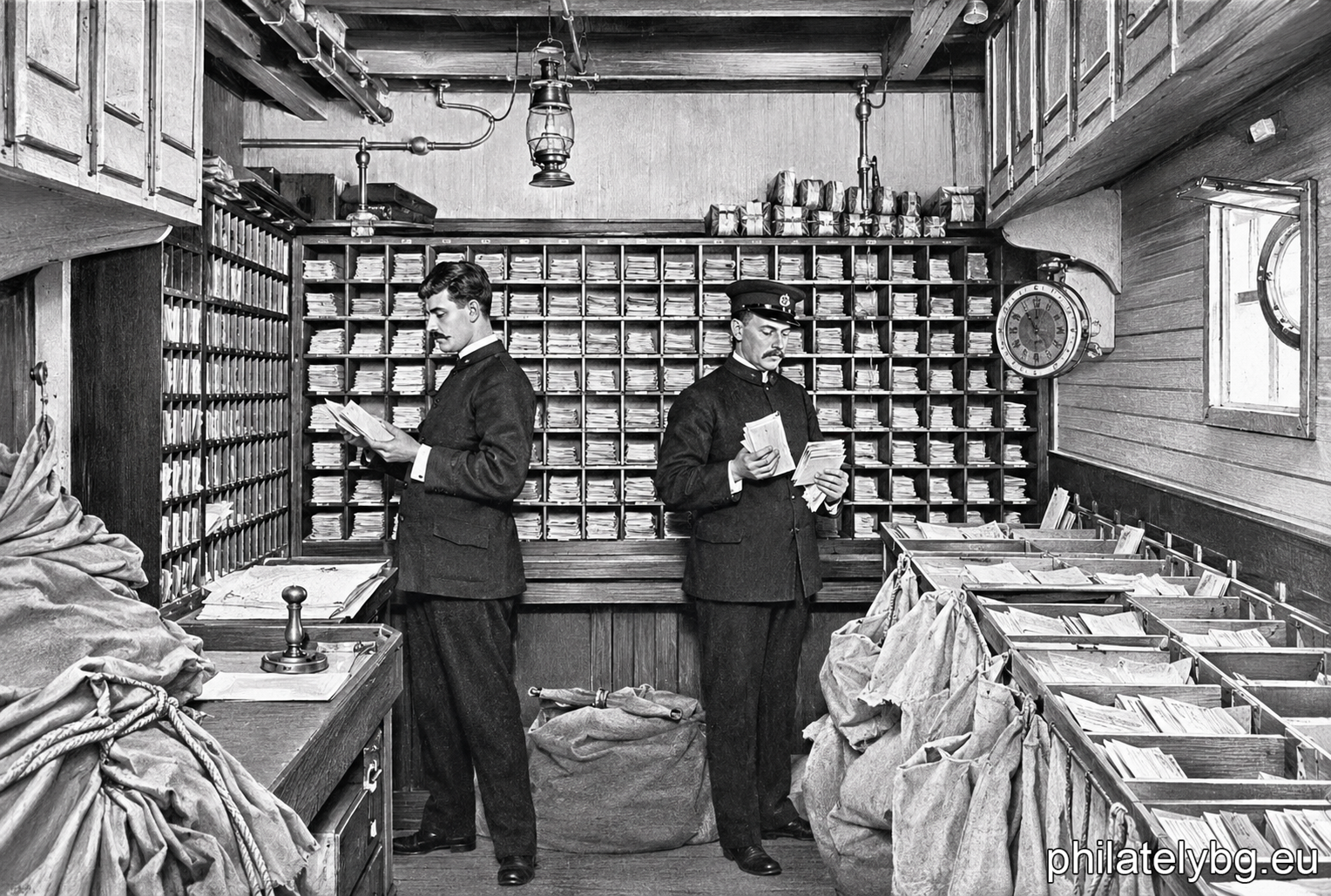
The five clerks were three Americans – William Logan Gwinn, John Starr March and Oscar Scott Woody – and two Britons – James Bertram Williamson and John Richard Jago Smith. Sea post clerks were most often drawn from the Railway Mail Service and the foreign mail section and were considered the best in the trade: they sorted tens of thousands of letters a day and rarely made mistakes. March was the oldest, in effect the ship’s postmaster, and had a reputation for bad luck, because in his eight-year career his ships had been involved in eight separate emergencies. Gwinn received permission to transfer to the Titanic so that he could get home sooner, where his wife Florence Gwinn was ill. Williamson and Smith were bachelors who supported their brothers, sisters and aging parents. The rules required sea post clerks to protect the mail at any cost.
For the philatelist, the Titanic is interesting also because her mail was real, not merely symbolic. Letters posted on board received the postmark “Transatlantic Post Office 7”. A letter to Berlin bearing that postmark was sent ashore, probably at Cherbourg, and is now kept in the National Postal Museum in the United States. A postcard with a British one-penny stamp, written on 10 April, was postmarked “TRANSATLANTIC POST OFFICE”, and its author wrote in the text that he would catch the mail at Cherbourg. There are also cards with a “Queenstown” postmark. The items handed ashore at Cherbourg and Queenstown reached their addressees. Everything that remained in the ship’s sacks sank with her. For that reason, mail from the Titanic is considered one of the rarest artifacts of the disaster.

On the night of 14–15 April the five clerks celebrated Woody’s birthday in their private dining room, though sources disagree on which birthday it was. Soon after the collision with the iceberg, at about 11:40 p.m., Smith was, according to some accounts, called to the bridge, where he reported that the mail room was filling with water. The clerks went down to it. According to the testimony of one steward, the water was almost two feet, that is about 60 centimeters, below the deck on which they stood, and sacks were floating in it. They began with the registered mail and tried to carry about 200 sacks to the upper decks in the hope of saving them. According to accounts, they also made several stewards help them, and by some descriptions they carried sacks of about 45 kilograms up four flights of stairs. The last people to see them testified that they were there, dragging sacks. The annual report of the US Postmaster General for 1912 states that about a quarter of an hour after the collision the lower room was almost full of water and the sacks were floating.
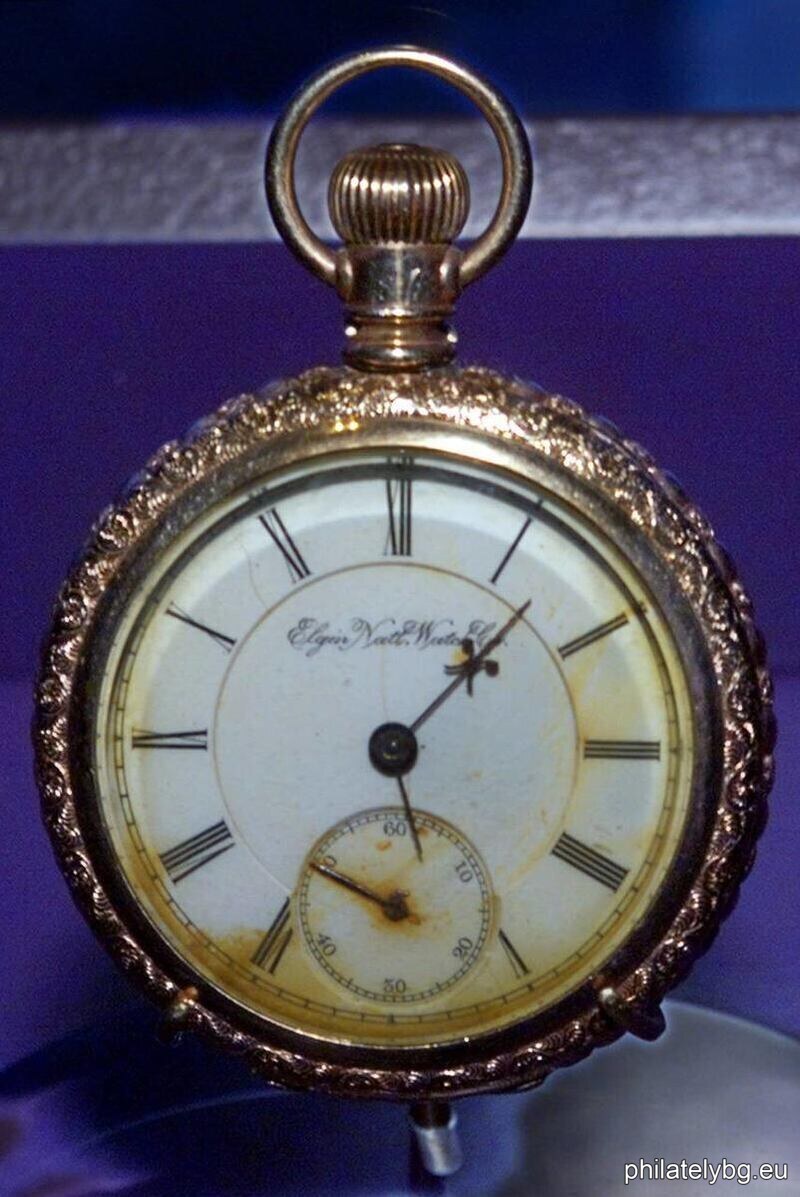
None of the five survived. Only the bodies of Woody and March were found. March’s watch had stopped at 1:27 a.m. From this it is inferred that the water did not reach him until almost two hours after the collision, but this is an interpretation, not a proven fact. It is also a supposition that the clerks probably missed their chance to save themselves while they were looking after the mail: some researchers think so. In London the General Post Office received a telegram from the ship’s owner saying that there was no danger to life. March’s watch is today in the National Postal Museum in the United States, and in Southampton there is a memorial to the postal workers.
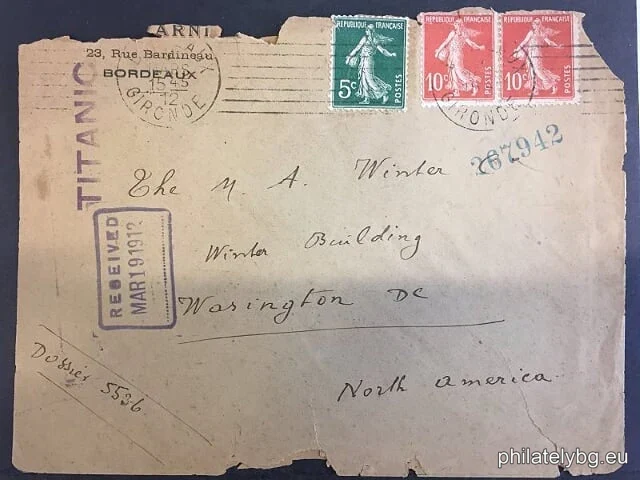
There is another “Titanic” rarity, in which the letters were not on board. In March 1912, mail from France to the United States received a violet single-line “TITANIC” handstamp (37 by 6 mm), probably in Paris or Cherbourg, because the ship was expected to sail on 20 March. Construction, however, was delayed and the maiden voyage was postponed to 10 April. Probably the news did not reach the postal clerks in time, and the mail was transferred to the next White Star Line ship, by which it reached its recipients. Thus the covers marked “TITANIC” did travel, but not on the Titanic. The number of known examples is given differently in different auction descriptions – from eight to twenty-four – so the exact figure is not known.
What remains of the mail? The wreck was found in September 1985. Expeditions later entered the postal rooms as well, and video from a submersible shows the flooded room and sacks. Whether there are legible letters inside is not known. The assumption that the paper has rotted away entirely is also only an assumption. What is certain is this: millions of letters were lost, and of the five clerks history has preserved the names and their last hours – William Logan Gwinn, John Starr March, Oscar Scott Woody, James Bertram Williamson and John Richard Jago Smith. What also remain are the covers and cards that went ashore in time to reach their addressees.
Sources
National Postal Museum, Smithsonian Institution, “Titanic’s Mail Clerks” (archived text from the exhibition “Posted Aboard RMS Titanic”, 2001) – the clerks, the organization of the sea post, the rule on protecting the mail – https://postalmuseum.si.edu/exhibition/fire-ice-hindenburg-and-titanic-exhibition-ice-the-titanic-disaster/titanic’s-mail-clerks
National Postal Museum, “RMS Titanic Letter” and Smithsonian Institution, “Letter Mailed Aboard RMS Titanic” – a letter with the “Transatlantic Post Office 7” postmark – https://postalmuseum.si.edu/rms-titanic-letter
The Postal Museum (UK), “How was the life of posties on board of the most famous ship of all?” – the sacks, the postal rooms, 200 sacks of registered mail, the telegrams – https://staging1.postalmuseum.org/?p=8514
US National Archives, blog “RMS Titanic: Letters from a Lost Liner” – the White Star Line contracts, the rooms on G Deck, the clerks – https://prologue.blogs.archives.gov/2012/02/07/rms-titanic-letters-from-a-lost-liner/