



 Comets, observatories, planetariums and one stamp that reached Pluto
The sky is one of the oldest subjects in philately, but the stories behind astronomical stamps are rarely quiet. Panic over a comet is printed on postcards, the anniversaries of observatories are recorded on stamps, and a planetarium receives a stamp of its own only a century after its first performance. The strangest story, however, is about an American stamp that was not merely stuck on a letter but travelled farther than any other stamp in history. This article gathers these threads into one account of how astronomy leaves its traces in the post.
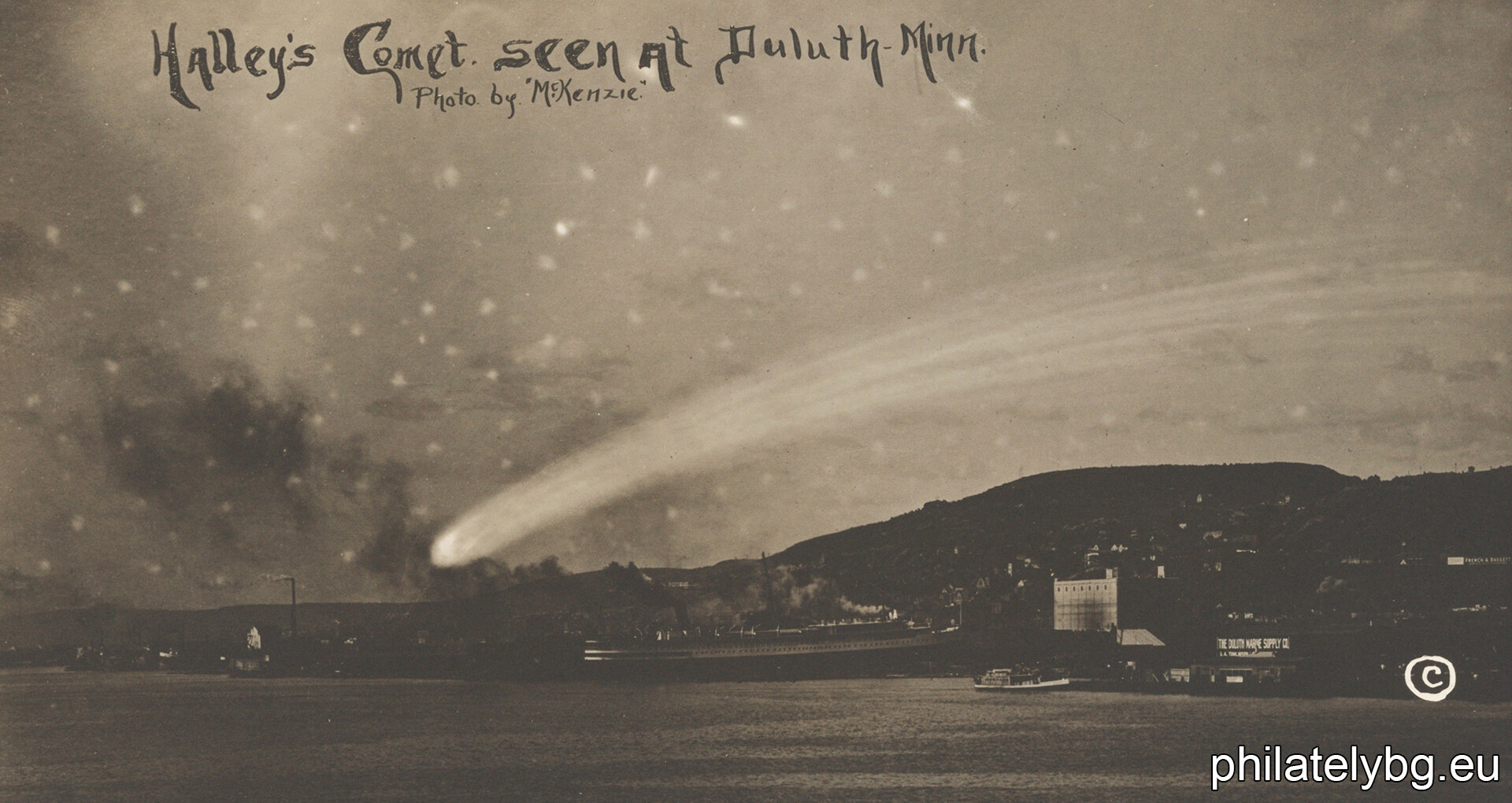
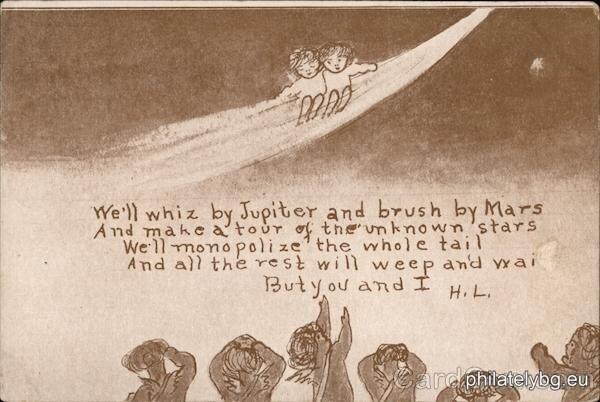 The first trace is the postcards. Between 1907 and 1915, in the golden age of the picture postcard, estimates say the United States mailed more than a billion one-cent postcards a year, and astronomical motifs such as great observatories and comets were common. The year 1910 was especially noisy. Early in the year the Great January Comet blazed in the sky, and in May Halley's Comet appeared. Then the world learned that its tail contained the poisonous gas cyanogen, and panic broke out. Camille Flammarion was quoted in The New York Times as saying the gas might extinguish life on Earth, while in reality the tail was far too thin to be dangerous. The market took advantage: anti-comet pills, comet insurance and anti-comet umbrellas were sold, and postcards showed the French trying to leave the planet, while the German ones were playful. Even Theodore Roosevelt's Progressive Party used the image of Halley's Comet on a card of its own.
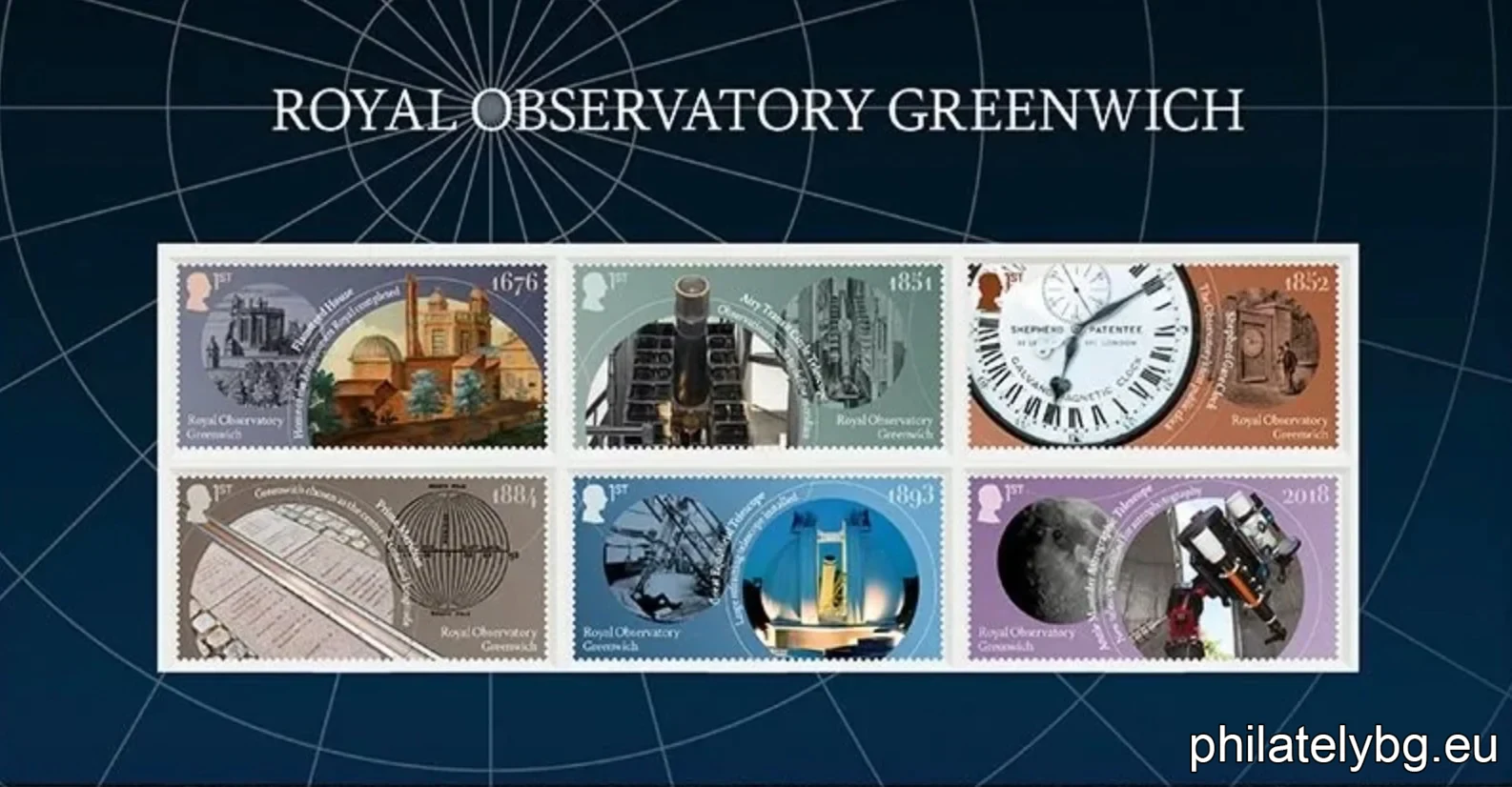 The second trace is the observatories themselves. The Royal Observatory at Greenwich was founded in 1675 by King Charles II to solve the problem of determining longitude at sea. In 1884 it became the basis of the prime meridian, chosen at a conference in Washington among 25 countries. The British post marked the centenary of that choice in 1984 with a set of four stamps: 16 pence with a view of the Earth from Apollo 11, 20.5 pence with a navigational chart of the English Channel, 28 pence with the observatory and 31 pence with George Airy's Transit Circle, all carrying a red line of the meridian. In 2025, for the 350th anniversary, a set of six stamps appeared: Flamsteed House of 1676, Airy's Transit Circle of 1851, the Shepherd Gate Clock of 1852, the prime meridian of 1884, the Great Equatorial Telescope of 1893 and the Annie Maunder astrograph. For the collector there is a detail: the presentation pack with affixed stamps cannot be used for postage, and two special postmarks were offered for the first day, one of them showing the Great Equatorial Telescope.
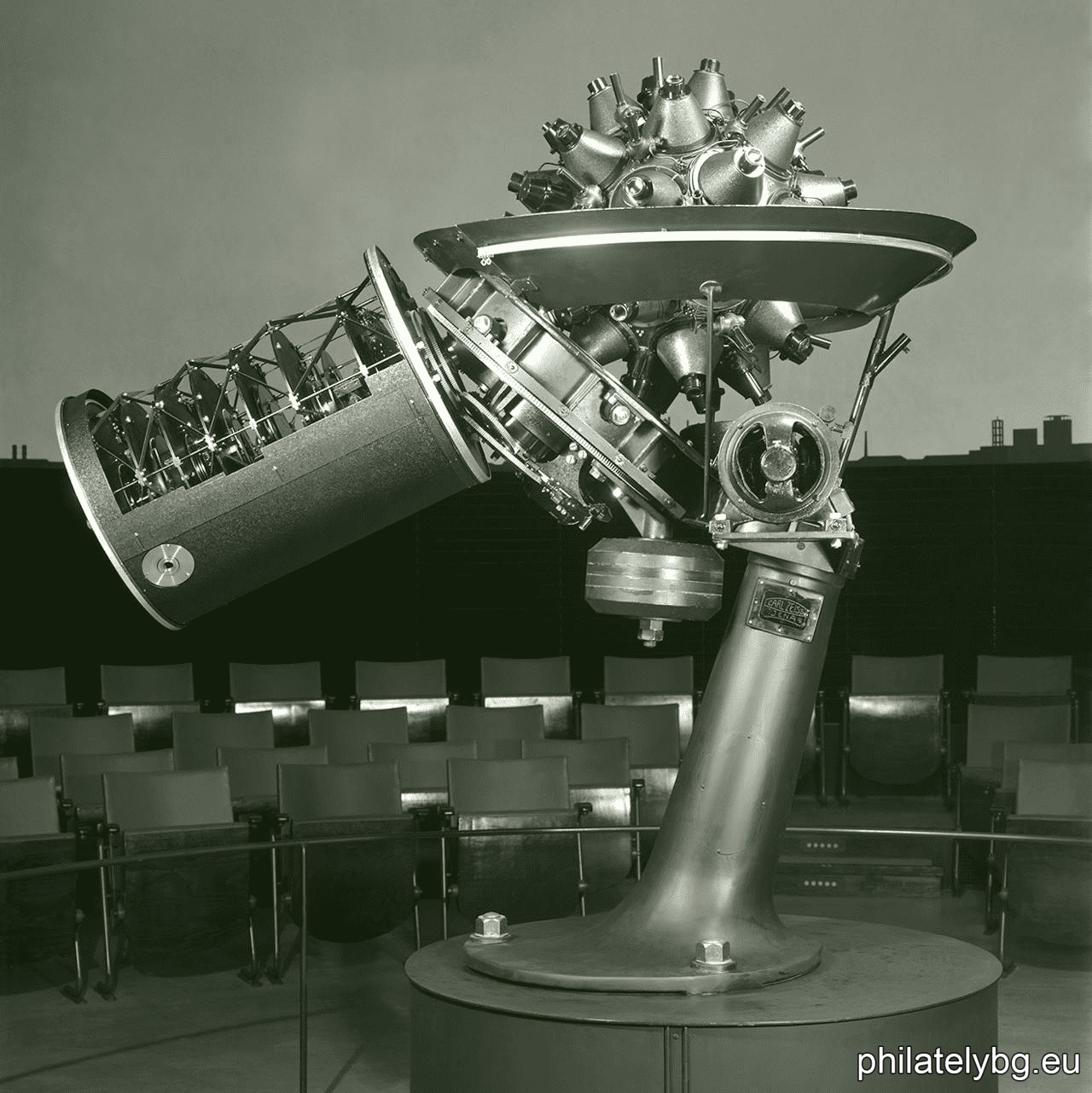 The third trace is the planetarium. The idea comes from Oskar von Miller, founder of the Deutsches Museum in Munich, who approached the Carl Zeiss company in Jena in 1913. According to another source, the concept of a projection planetarium was formulated on 24 February 1914 at a meeting of the company's scientists, and the engineer Walther Bauersfeld proposed projecting the Sun, Moon and planets. The first projector was built between March 1919 and July 1923, and on 21 October 1923 it was presented in Munich to invited guests. Public demonstrations in Jena, called the "Miracle of Jena", date from 1924, and permanent operation of the first planetarium in the Deutsches Museum began on 7 May 1925. The first projector filled the dome with 4,500 stars. The dates differ between sources: some link them to the summer of 1923 and the roof of the factory in Jena, others to the official demonstrations. The centenary of the planetarium was marked by the German post with a stamp issued on 5 October 2023.
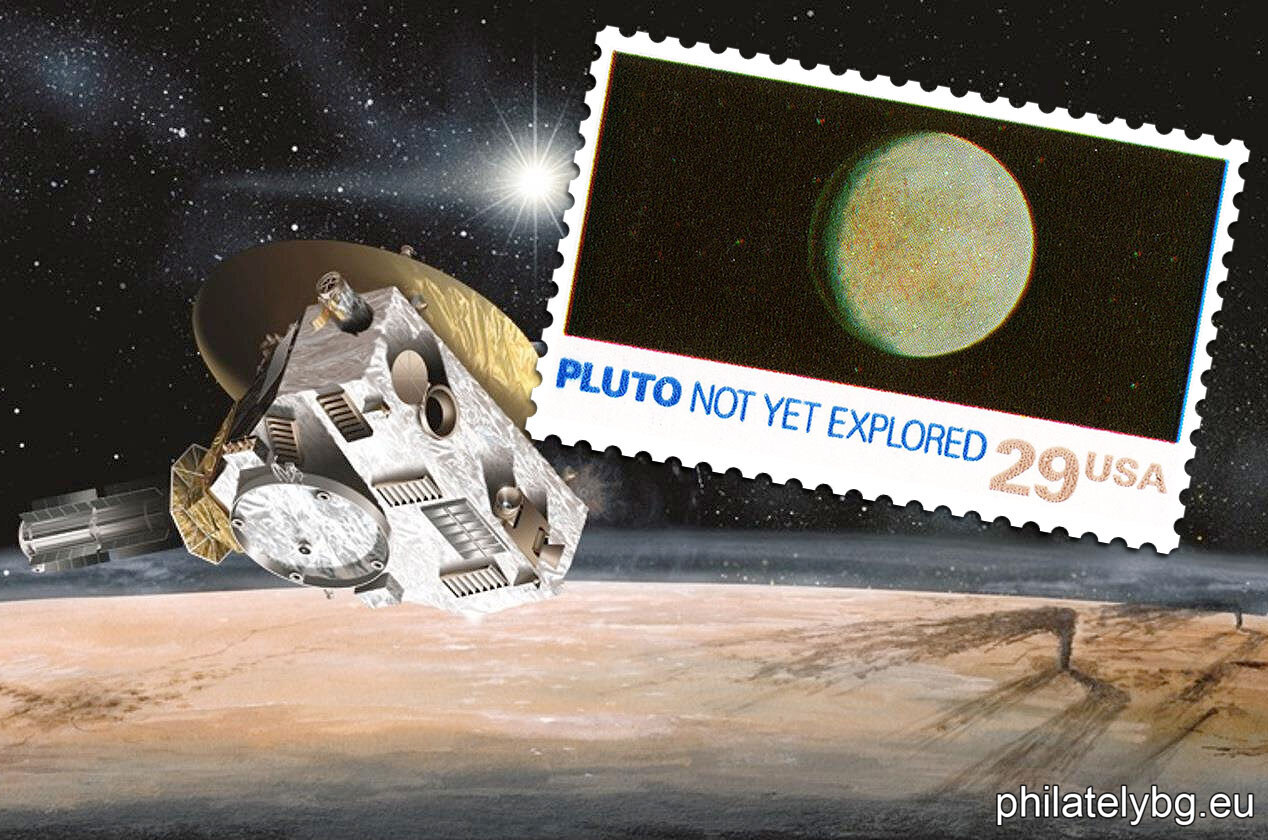
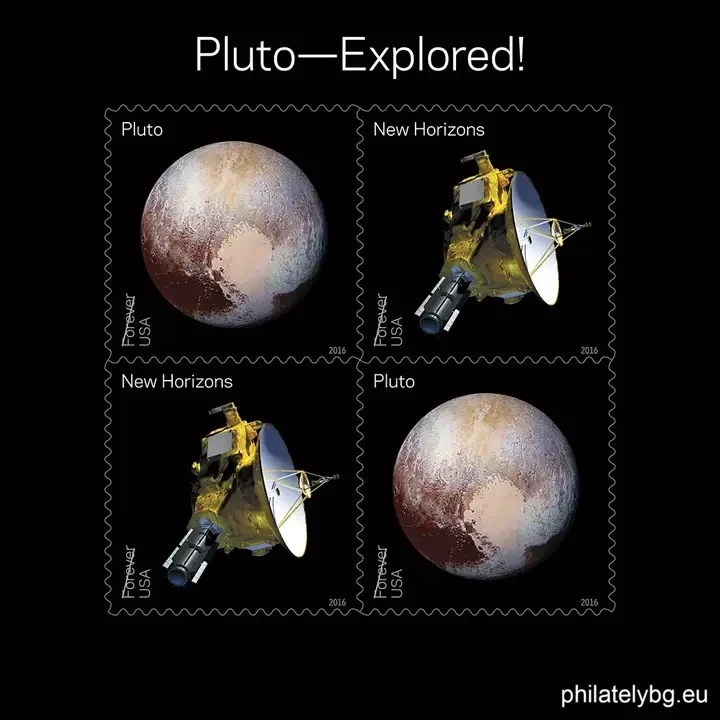 The best story, however, is about Pluto. In 1991 the American post issued a series of 29-cent stamps on the exploration of the planets. Each planet showed the spacecraft that had visited it. For Pluto there was no spacecraft, only the inscription "Pluto: Not Yet Explored". The inscription annoyed scientists. According to one account, on the day of first issue, 1 October, an employee at the Jet Propulsion Laboratory took the stamp to a friend and called it a travesty. In 2006 the leader of the New Horizons mission, Alan Stern, attached one such stamp to the spacecraft, next to a capsule holding about an ounce of the ashes of Clyde Tombaugh, the discoverer of Pluto. The stamp travelled about 3.26 billion miles, and on 14 July 2015, the day of the flyby, scientists held up a print of it before the cameras with a correction. The American post states that it is the farthest-travelled stamp, and Guinness has recorded a record. In 2016 the post issued a sheet, "Pluto—Explored!", at the world stamp show in New York. One joke has it that if the stamp was not cancelled, the spacecraft will be returned to sender.
If 1910 was the year of fear of the comet, 1986 was the year of stamps. The return of Halley's Comet was the least favourable for observation in more than 2,000 years, and it reached only about second magnitude. Even so, dozens of countries issued hundreds of stamps, postcards and covers. On 18 February 1986 Great Britain issued four stamps: 17 pence "Halley", 27 pence "Giotto", 31 pence "Twice in a Lifetime" and 34 pence "Comet". Giotto, the probe of the European Space Agency, passed about 370 miles from the comet on 14 March 1986. Belize, Hungary and Hong Kong also issued their own series. Thus fear of the tail turned into a reason to collect: instead of umbrellas against comets, people collected first day covers with the probe.
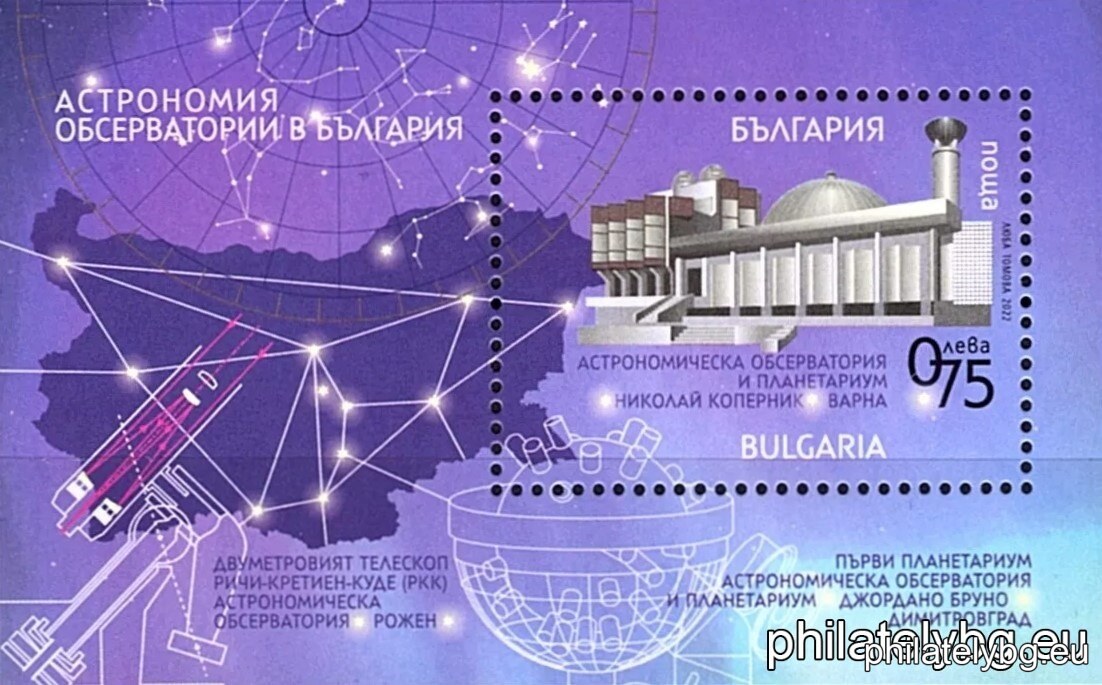 The Bulgarian part of this story is more modest, but good for the collector. The National Astronomical Observatory Rozhen was officially opened on 13 March 1981, and its largest instrument is a two-metre telescope. In 2009 Bulgaria took part in the EUROPA series on the theme of astronomy. In 2012 a sheet "Grand Parade of the Planets" appeared, designed by Todor Vardjiev. In 2017 a stamp was issued for the 60th anniversary of the Bulgarian Astronautical Society, and the ceremony validating it was attended by Bulgaria's first cosmonaut, Georgi Ivanov, and the society's chairman, Professor Petar Getsov. In 2022 a sheet "Astronomical Observatories in Bulgaria" with a face value of 0.75 leva, designed by Lyuba Tomova, was issued. And in 2023 a stamp of 2.70 leva for the 550th anniversary of the birth of Nicolaus Copernicus was printed in a run of 9,300 copies according to one catalogue website.
What links all these stories? The sky in the post is not only a pretty picture but a reflection of its time. The postcards of 1910 show how easily astronomy becomes a trade in fear. The Greenwich stamps show how science can become a source of national pride. The planetarium shows that a machine can become a postal subject only after a century. And the Pluto stamp shows that a stamp can become part of a scientific mission. That is why a thematic collection on astronomy can gather not only stamps but also postcards, first day covers and special postmarks.
Sources
Astronomy.com, „Postcards from the Oort Cloud: Sending comets through the mail“ (astronomy.com)
Royal Museums Greenwich (shop.rmg.co.uk), Royal Mail (shop.royalmail.com), Collect GB Stamps (collectgbstamps.co.uk)
ZEISS (zeiss.com), Германски музей (deutsches-museum.de)
NASA (nasa.gov)
Mystic Stamp Company (mysticstamp.com), BFDC (bfdc.co.uk)