



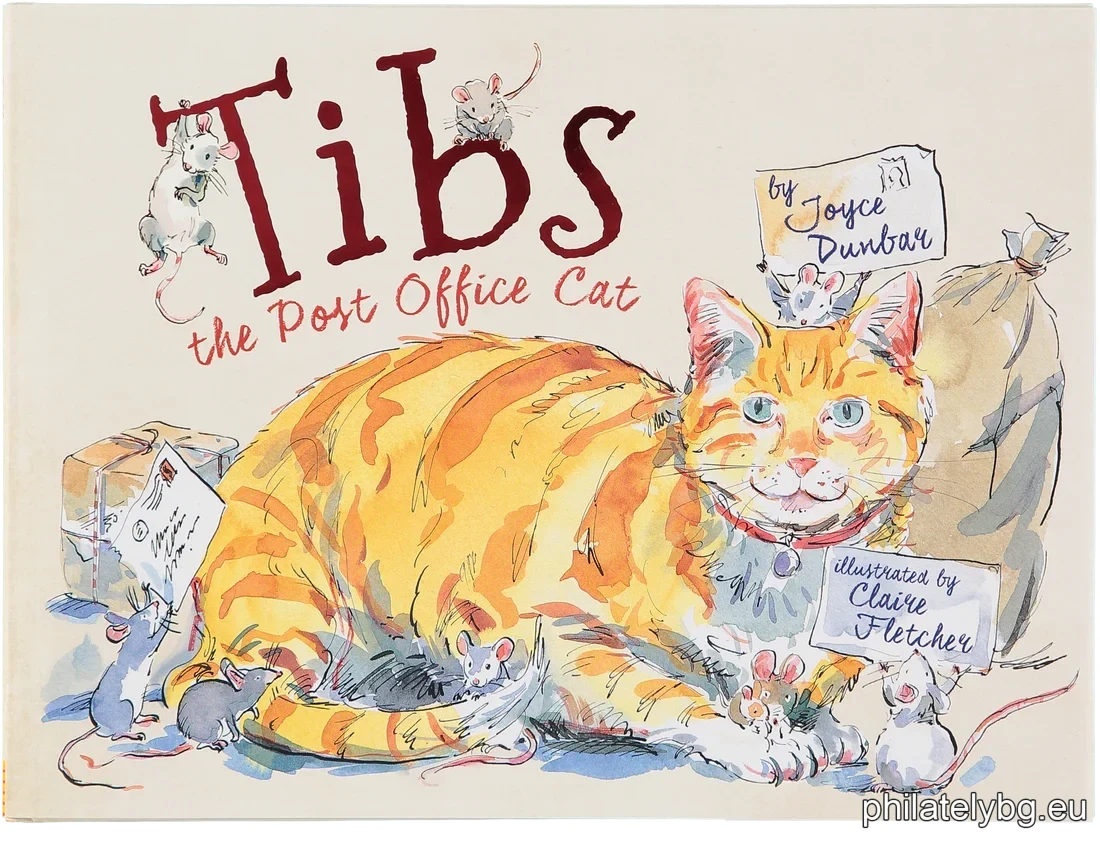
 How the British Post Office took cats into public service, paid them an allowance and argued about their pay rise all the way to Parliament.
London, autumn 1868. The Money Order Office has a serious problem. Mice are gnawing the money orders and documents. The staff set traps and try everything they can think of. Nothing works. Then the Controller of the Office, Frederic Rowland Jackson, writes an official letter. In it he proposes a solution the state has never seen before. The Post Office should appoint cats.
The letter is dated 23 September 1868. Jackson reports that he has already asked the resident porter, James Tye, to find three cats. All that remains is to decide who will pay for their food. The Secretary of the Post Office, John Tilley, replies the very same day. His answer survives in the archive and is a true bureaucratic gem: "Three cats may be allowed on probation. They must undergo a test examination and should, I think, be females. It is important that the cats be not overfed and I cannot allow more than 1/- a week for their support. They must depend on the mice for the remainder of their emoluments and if the mice be not reduced in number in six months a further portion of the allowance must be stopped."
Jackson had asked for two shillings. He gets half. One shilling a week for three cats. The probation period is six months. The cats, however, do not disappoint. On 7 May 1869 a report notes that "the cats have done their duty very efficiently". And so the British Post Office officially has employees on four legs.
The first pay rise soon follows. In 1873 the cats' allowance is increased by sixpence a week, to one shilling and sixpence. London's example catches on, and cats start working in other post offices around the country too. Each post office can claim money for the upkeep of its cats. Every such sum produces official letters, minutes and replies. To this day they are kept in the Post Office archive in a separate file titled "Cats: maintenance allowance".
 The next rise is a very long time coming. In 1952 British newspapers discover that the Post Office cats have not had a rise for eighty years. The public is outraged. On 18 March 1953 the matter reaches the House of Commons. The MP Captain Lawrence Orr asks the Assistant Postmaster-General, David Gammans, when the cats' allowance was last raised. He also asks what the allowance is for cats in Northern Ireland. Finally, he asks the most important question of all. What happens if a cat has kittens? Is there a family allowance?
Gammans replies with the same sense of humour. He explains that the cats at Post Office Headquarters have recently received a special allowance, "presumably for prestige reasons". For all the others, however, there has been a wage freeze since July 1918. And he adds that "there have been no complaints". The Assistant Postmaster-General assures the House that Post Office cats have "an adequate maternity service". And that equal pay prevails among them.
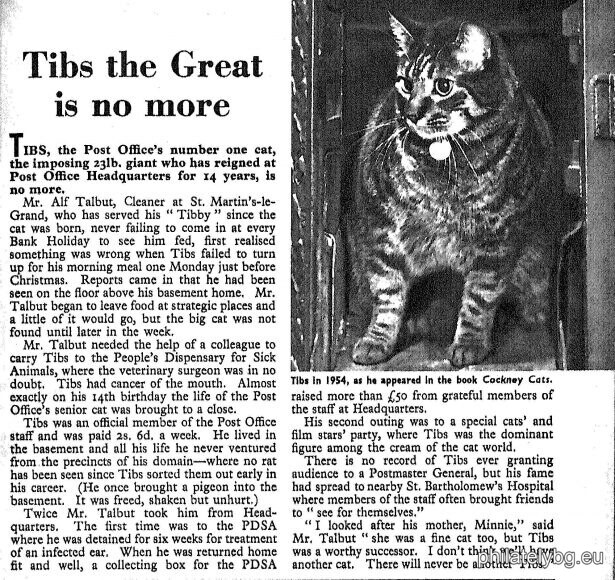 The most famous Post Office cat is Tibs the Great. He is born in London in November 1950. His mother, Minnie, is also a Post Office cat. Tibs lives in the basement of Post Office Headquarters, in the staff refreshment club. He receives an allowance of two shillings and sixpence a week, that is, half a crown. He weighs more than ten kilograms. In his fourteen years of service at Headquarters, not a single mouse appears. Tibs even becomes a celebrity. He is invited to a party with film stars. His portrait is included in the 1953 book "Cockney Cats".
Tibs dies at the end of 1964. The Post Office staff magazine publishes his obituary under the headline "Tibs the Great is no more". The last cat at Post Office Headquarters is called Blackie. Blackie dies in June 1984. At around the same time, cloth mail sacks are replaced by plastic ones that mice cannot gnaw through. And the profession of the Post Office cat disappears.
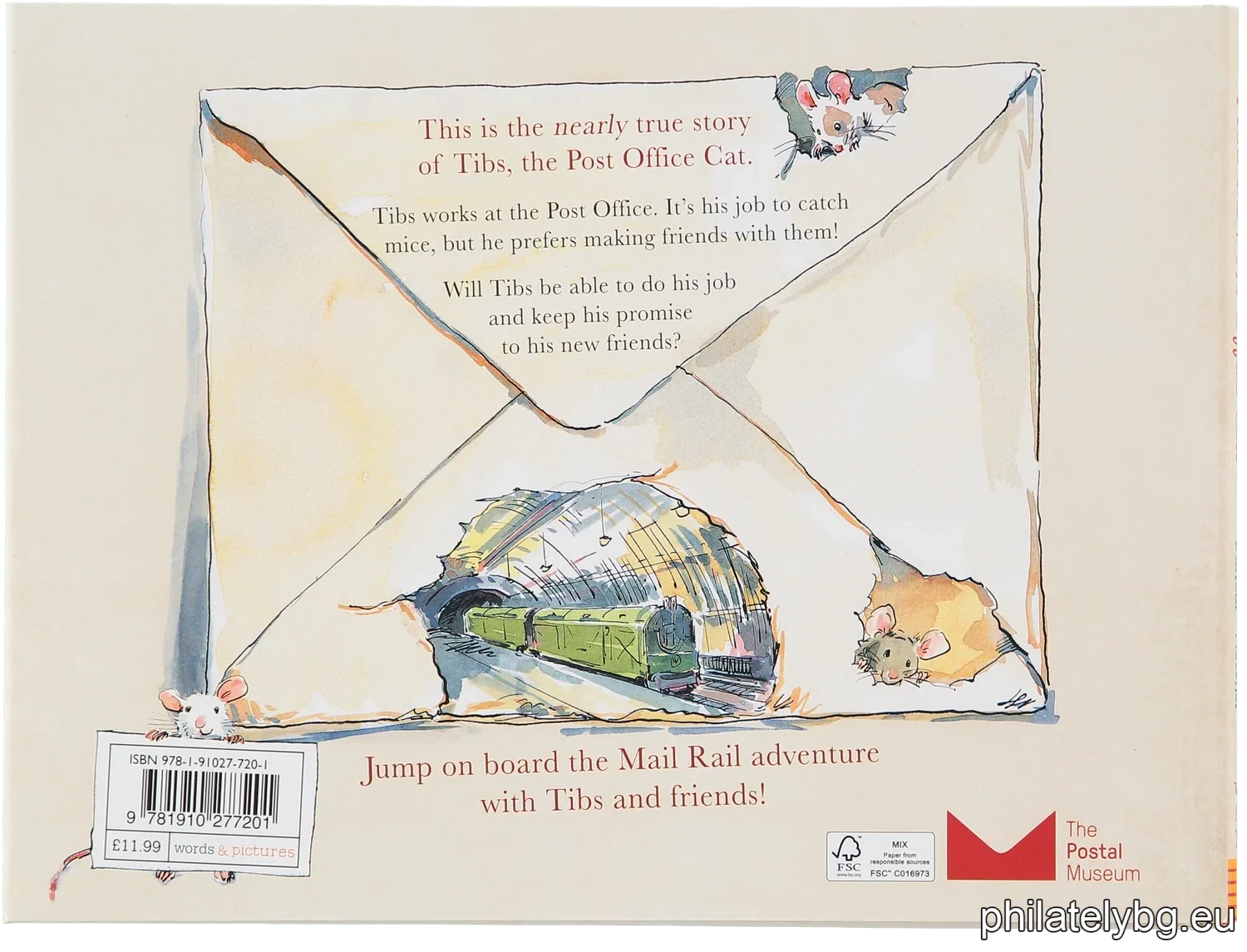
The story, however, is not forgotten. In 2018 The Postal Museum in London marks 150 years since the first Post Office cats were appointed. The museum launches a competition for its own honorary cats. The winners are called Artemis and Apollo. They no longer catch mice. But they are a reminder of the time when three nameless cats received a state allowance of one shilling a week. And had to earn the rest themselves by catching mice in the Post Office.
Sources
The Postal Museum, London
Hansard, 18 March 1953
Smithsonian Magazine
The National Archives
Time
Londonist
Family Tree Magazine
Time Out London
Papers Past
Wikipedia: Tibs the Great, David Gammans